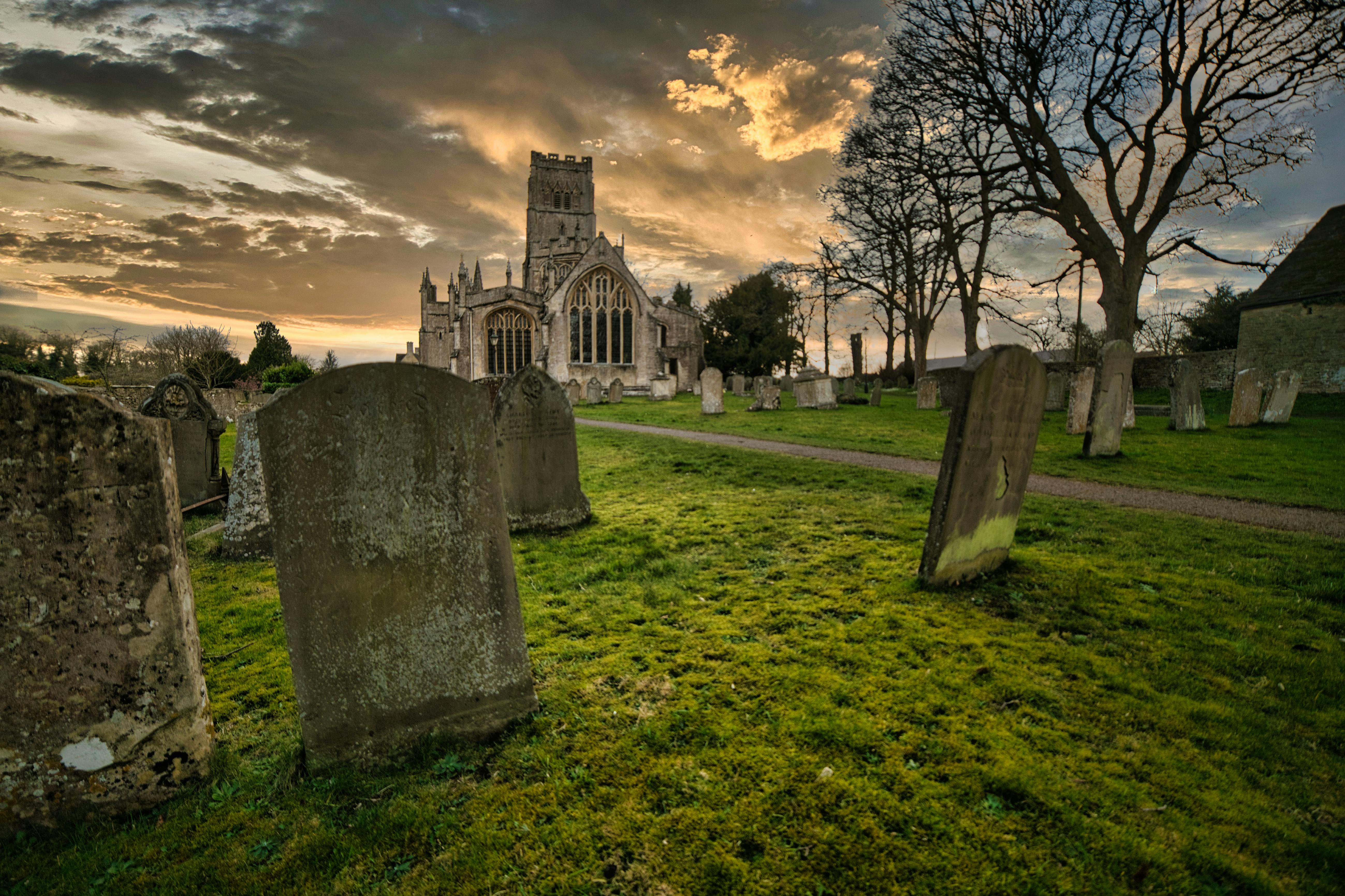
In the 17th Century James Shirley wrote what could appear to be a rather depressing poem called “Death the Leveller.” The first verse goes:
‘The glories of our blood and state
Are shadows, not substantial things;
There is no armour against Fate;
Death lays his icy hand on kings:
Sceptre and Crown
Must tumble down,
And in the dust be equal made
With the poor crookèd scythe and spade.’
In other words, no matter who you are – a king or a farm labourer – both have the same “fate” when the “sceptre and crown” end up in the same place as the “poor crooked scythe and spade” – i.e., “in the dust be equal made”.
Not a very cheerful subject, but as we continue on in Ecclesiastes we note that Qoheleth does not avoid the realities of life no matter how negative they may sound. So here in chapter 2 he recognizes the truth concerning the inevitability of death. He writes:
12 Then I turned my thoughts to consider wisdom,
and also madness and folly.
What more can the king’s successor do
than what has already been done?
13 I saw that wisdom is better than folly,
just as light is better than darkness.
14 The wise have eyes in their heads,
while the fool walks in the darkness;
but I came to realize
that the same fate overtakes them both.
15 Then I said to myself,
“The fate of the fool will overtake me also.
What then do I gain by being wise?”
I said to myself,
“This too is meaningless.”
16 For the wise, like the fool, will not be long remembered;
the days have already come when both have been forgotten.
Like the fool, the wise too must die!
So, Qoheleth has considered wisdom and folly and has come to the conclusion that on this subject he has found the answer:
13 I saw that wisdom is better than folly,
just as light is better than darkness.
As we look around us and consider our own lives, I don’t think we can disagree on this one.
But he then moves on to the truth that no matter how wise or foolish a person is, he is still going to die, so he asks, What then do I gain by being wise?” I said to myself, “This too is meaningless.”
Adding insult to injury, Qoheleth realizes that not only will he die but then he will eventually be forgotten as well. No matter how famous, how rich, how powerful, how influential, one day someone (standing in front of his tombstone) will ask “who was he?”
David Pawson writes: “Those words went through my mind as I stood in Bladon and looked at Winston Churchill’s tomb. There it was, just one tomb surrounded by a lot of others, and the other names meant nothing. He was joining the unknowns. His name will survive a bit longer but already to my children the name did not suggest much, though it does to me. It becomes just a name, rapidly becoming part of dull, boring history lessons.” (# 61)
By the grace of God, Ecclesiastes is not the only book in the Bible and God’s revelation continued on into the New Testament where we read these words in 1 Corinthians 15 concerning the gospel [by which] you are saved, and, in particular, the resurrection – not only of Jesus, but also concerning us who trust in Him:
For what I received I passed on to you as of first importance: that Christ died for our sins according to the Scriptures, 4 that he was buried, that he was raised on the third day according to the Scriptures…
9 If only for this life we have hope in Christ, we are of all people most to be pitied.
20 But Christ has indeed been raised from the dead, the firstfruits of those who have fallen asleep. 21 For since death came through a man, the resurrection of the dead comes also through a man. 22 For as in Adam all die, so in Christ all will be made alive…
25 For he must reign until he has put all his enemies under his feet. 26 The last enemy to be destroyed is death…
51 Listen, I tell you a mystery: We will not all sleep, but we will all be changed— 52 in a flash, in the twinkling of an eye, at the last trumpet. For the trumpet will sound, the dead will be raised imperishable, and we will be changed. 53 For the perishable must clothe itself with the imperishable, and the mortal with immortality. 54 When the perishable has been clothed with the imperishable, and the mortal with immortality, then the saying that is written will come true: “Death has been swallowed up in victory.”
55 “Where, O death, is your victory?
Where, O death, is your sting?” (1 Corinthians 15:3-4, 9, 20-22, 25-26, 51-55)
And then those wonderful words in revelation 21:1-5
Then I saw “a new heaven and a new earth,” for the first heaven and the first earth had passed away, and there was no longer any sea. 2 I saw the Holy City, the new Jerusalem, coming down out of heaven from God, prepared as a bride beautifully dressed for her husband. 3 And I heard a loud voice from the throne saying, “Look! God’s dwelling place is now among the people, and he will dwell with them. They will be his people, and God himself will be with them and be their God. 4 ‘He will wipe every tear from their eyes. There will be no more death’ or mourning or crying or pain, for the old order of things has passed away.”
5 He who was seated on the throne said, “I am making everything new!”
To God be the glory for the things He has done! Amen.