How do you feel about living in a world where basically the future and how that will impact you personally is unknown to you? Without being too dramatic, or even too pessimistic, as I write this, I realise that anything could happen before I have completed this short commentary on Ecclesiastes 11. It may be as simple as a phone call from a friend or family which calls me away to attend to some important matter. Or it could be as dramatic as… well I won’t let my imagination distract me any further. I think you get the point.
James, probably the half-brother of Jesus, wrote a letter to people he described as “the twelve tribes scattered among the nations.” Now, these people possibly were Christians who at some stage James knew in Jerusalem and maybe were members of his congregation of Jewish believers in Jesus. Then, due to persecution, probably after Stephen’s death, these believers were scattered as far as Phoenicia, Cyprus, and Syrian Antioch (Acts 8:1; 11:19). Something, I presume, they had not expected to happen to them.
So, James wrote them a letter and outlined some practical teaching on how to live for Jesus during tough times. Relevant to our topic today, in chapter 4 we read:
13 Now listen, you who say, “Today or tomorrow we will go to this or that city, spend a year there, carry on business and make money.” 14 Why, you do not even know what will happen tomorrow. What is your life? You are a mist that appears for a little while and then vanishes. 15 Instead, you ought to say, “If it is the Lord’s will, we will live and do this or that.”
Qoheleth says something similar in this chapter. He writes:
Ship your grain across the sea;
after many days you may receive a return.
2 Invest in seven ventures, yes, in eight;
you do not know what disaster may come upon the land.
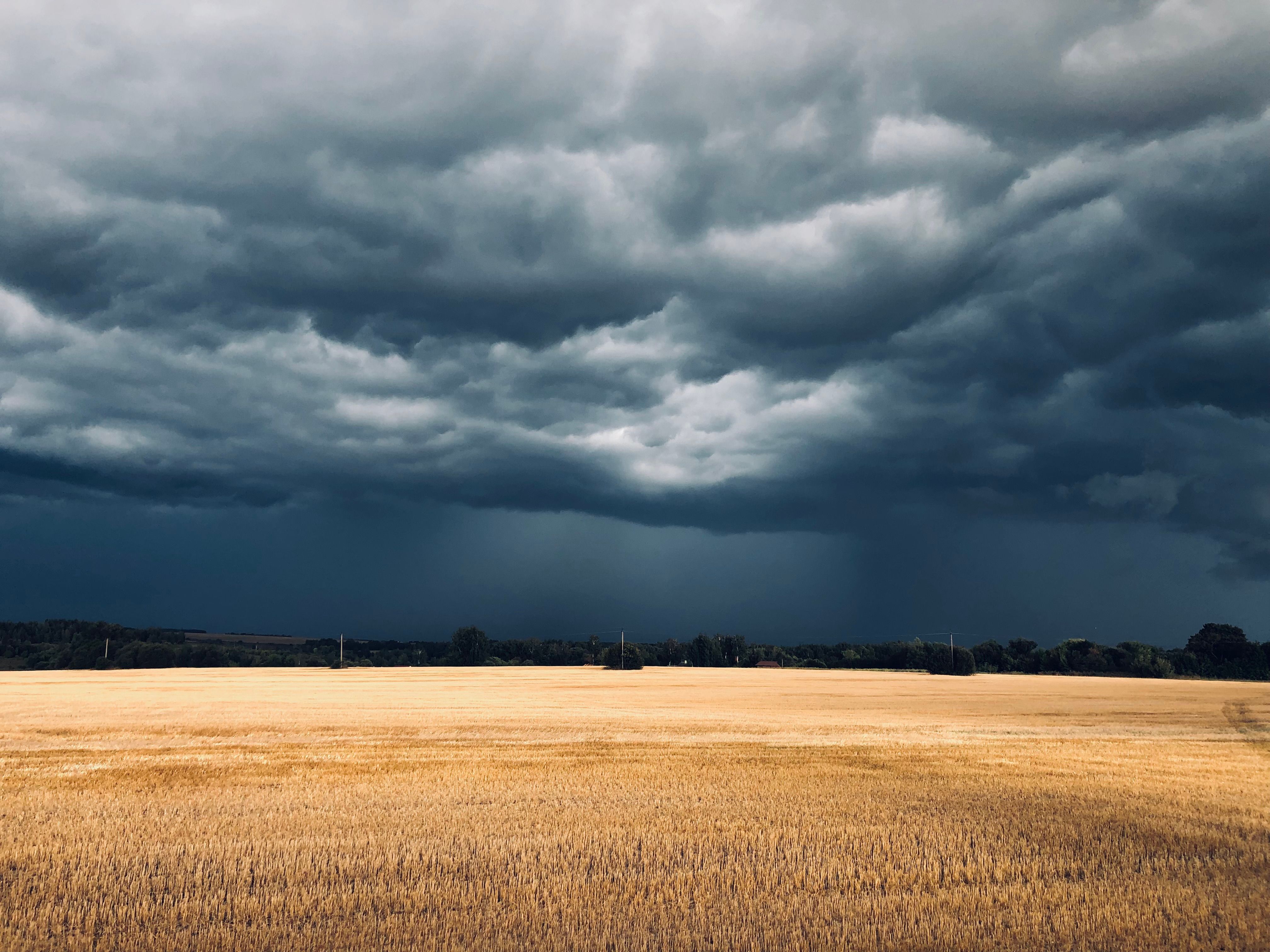
3 If clouds are full of water,
they pour rain on the earth.
Whether a tree falls to the south or to the north,
in the place where it falls, there it will lie.
4 Whoever watches the wind will not plant;
whoever looks at the clouds will not reap.
5 As you do not know the path of the wind,
or how the body is formed in a mother’s womb,
so you cannot understand the work of God,
the Maker of all things.
6 Sow your seed in the morning,
and at evening let your hands not be idle,
for you do not know which will succeed,
whether this or that,
or whether both will do equally well.
C Wright comments on these verses as follows:
“… Qoheleth in verse 5 … affirm[s] an important theological stepping stone toward his final section. He has already proved beyond doubt all through the book that there are limits to our human knowledge, and here he illustrates it yet again from our ignorance of the path of the wind or how a human baby grows in a mother’s womb (v. 5a; let’s remember he was writing before advances in meteorological science and obstetric medicine). Both of these are wonderful creational facts: the wind does blow and babies do get born, no matter how much or how little we understand of either process. But now he wants to affirm that these very things that we cannot understand (including randomness and unpredictability) are all in the hands of God. They are all part of “the work of God,” the God who is “the Maker of all things” (v. 5b).” (# 60)
He continues:
“Now this is a great and positive thing to say. The whole world, life, the universe, and everything originate in God. So even if God’s ultimate purposes are hidden from our understanding, we can trust that God is somehow there, present, involved. And with the security of that confidence, we can throw ourselves into life and work as Qoheleth advocates. And yet, of course, while this encourages active faith, it does not remove the problems he has wrestled with all through the book. There is still so much of “the work of God” that remains puzzling, incomprehensible— ‘hebel’, in a word. Nevertheless, the strong foundational perspective of verse 5 (the conviction that even what we cannot understand can still be the work of God) means we can turn life’s unpredictabilities not into paralysis, but into opportunities (v. 6). So live adventurously. Don’t be idle. Be active, bold, and busy. Make your investments (“sow your seed”). You don’t know if this will succeed, or that, or both, or neither, but go for it anyway.” (# 60)
And so back to James when he says:
14 Why, you do not even know what will happen tomorrow. … 15 Instead, you ought to say, “If it is the Lord’s will, we will live and do this or that.” (James 4:14-15)
Having then acknowledged God’s sovereignty in life, we can then apply some great advice from Proverbs as we live and do this or that. It says:
Trust in the Lord with all your heart
and lean not on your own understanding;
6 in all your ways submit to him,
and he will make your paths straight. (Proverbs 3:5-6)