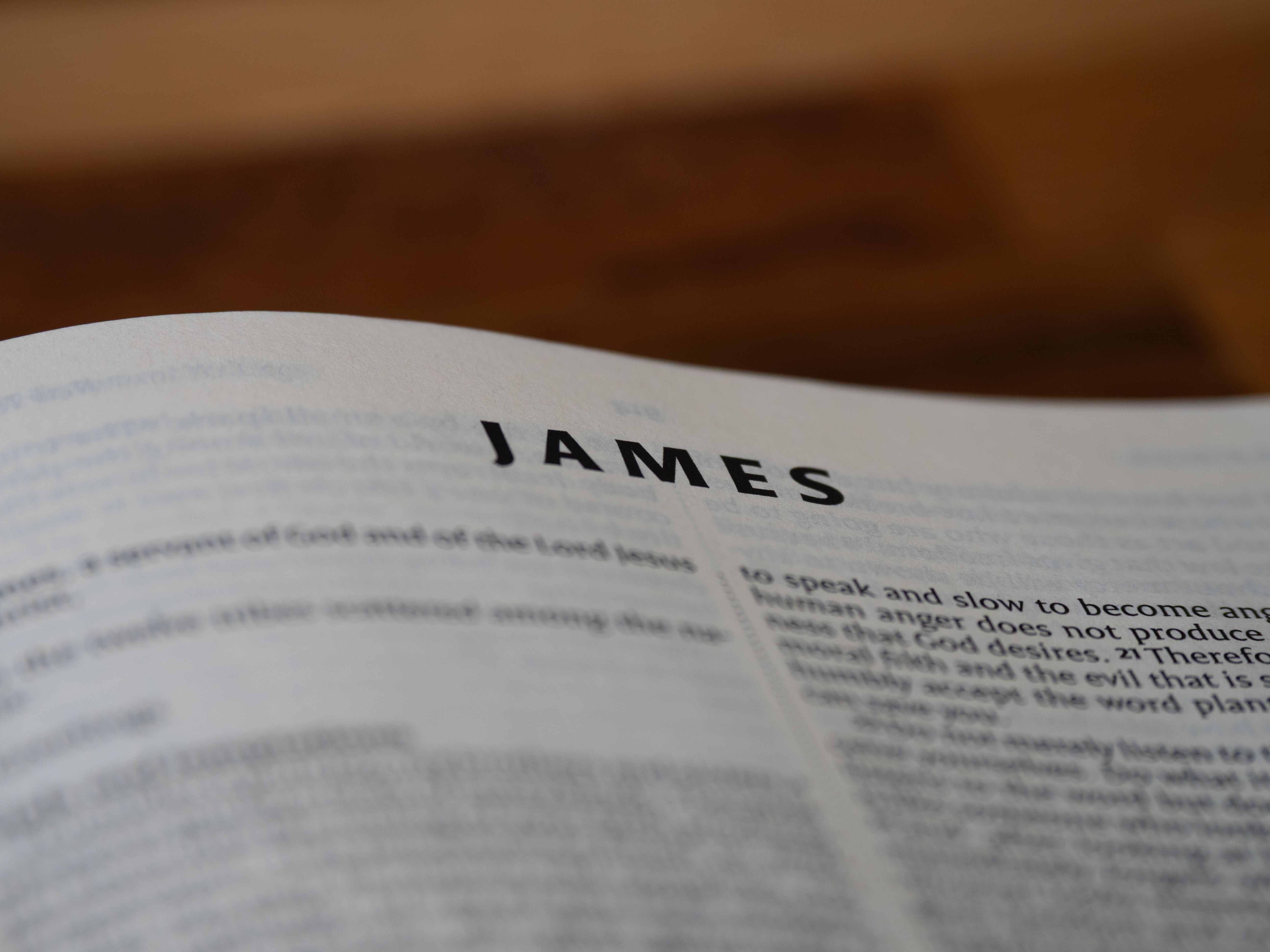
Well, this is interesting! As I drew near to the end of writing my Blog on Ecclesiastes, I considered what I should do next. Basically, if I continued on the way I was going, it meant delving into either the book of Job or Song of Songs, the last two books considered as Old Testament (OT) wisdom literature. But something else was going through my mind, and it was because of what we were studying at my local church. That was the letter of James in the New Testament (NT). Our pastors have recently given messages on this letter and alongside them I also gave a message on one of the chapters. It was during my preparations for my message that I realized that James, in his letter, seemed to draw on Proverbs as well as the teachings of Jesus.
So, here we are, moving from Ecclesiastes in the OT all the way through the ages to the letter of James in the NT, but on the same theme of the practical application of godly wisdom. Or, as the series was called at our church: “James: When Faith Meets Life.”
In my study I noticed that over the ages the Epistle (or letter) of James has often been classified as wisdom literature. The reason being because of its focus on wisdom as a gift of God that impacts our behaviour as followers of Jesus. This is a very practical letter where we see that James believes that our faith should change, in a positive way, how we live, speak and act in the world we live in. That our actions should be a demonstration of the faith that we profess. He addresses such issues as suffering, faith, favouritism, the use of the tongue, temptation, and the need for patience and prayer. Throughout this series, we’ll explore what it looks like when faith meets life. James gives us a practical challenge: to become people whose lives increasingly reflect the faith we profess, as God forms us into mature and faithful followers of Jesus.
Over the next weeks, we will consider all of these subjects and more, and this based on the recent messages at our fellowship.
So, who was James, who identifies himself as “James, a servant of God and of the Lord Jesus Christ” (1:1a)? Well, there are a few possibilities, but the consensus seems to be that he was the brother of Jesus (see Matthew 13:55) who eventually became a leader in the Jerusalem church (see Galatians 2:9, Acts 15:33)
The letter is written to “the twelve tribes scattered among the nations” (1:1b) and most believe that this refers to the Jewish Christians who had been forced to leave Jerusalem due to persecution, probably after Stephen’s martyrdom (Acts 8:1).
The letter was probably written around AD 50-60. James himself was martyred in AD 62.
The NIV Bible Study introduction comments that the distinctive characteristics of this letter are:
“… (1) its mistakably Jewish nature; (2) its emphasis on vital Christianity, characterised by good deeds and a faith that works (genuine faith must and will be accompanied by a consistent life-style); (3) its simple organisation; (4) its familiarity with Jesus’ teaching preserved in the Sermon on the Mount (compare James 2:5 with Matthew 5:3; James 3:10-12 with Matthew 7:15-20; James 3:18 with Matthew 5:9; James 5:2-3 with Matthew 6:19-20; James 5:12 with Matthew 5:33-37); (5) its similarity to OT wisdom writings such as Proverbs; (6) its excellent Greek.”
So, before we dive into this letter, let us remind ourselves why James is giving us this particular teaching, and that reason is found in chapter 1:4 when he says, so that you may be mature and complete, not lacking anything. All along his goal is to lead his readers and hearers, people like you and me, to full spiritual maturity, so that our whole being, without reservation, should be committed to following Jesus. His teaching is about becoming more life Jesus in both our words and actions.
May this be your experience as you consider this teaching over the next weeks.